
Software Systems for Utility Asset Visibility and Workforce Management
Electric utilities depend on accurate information about personnel, transformers, feeders, substations, distribution equipment, inventory, vehicles, and maintenance activities. Modern grid operations require software systems capable of connecting physical assets, workforce activities, identification technologies, and operational processes into a unified operational environment.
GridEnergy AI develops IoT software specifically for smart grid and energy system operations. The software helps utilities identify, locate, manage, verify, and analyze assets and workforce activities across transmission networks, distribution systems, substations, renewable energy facilities, maintenance depots, warehouses, and field service operations.
The software is designed to support AI-driven visibility, workforce coordination, access management, asset accountability, inventory optimization, maintenance progress tracking, and compliance documentation.
Utility Software Design Principles
Grid operations require software that supports large numbers of assets, geographically distributed personnel, strict security controls, and regulatory reporting requirements.
GridEnergy AI software is designed to support:
The software can be deployed across utility service territories while maintaining centralized visibility for operational teams.
Field Workforce Tracking Software
Field personnel represent a critical operational resource for utilities. Workforce visibility software helps organizations coordinate activities across service regions and infrastructure assets.
Crew Location Software
Crew Location Software provides visibility into workforce deployment across transmission and distribution networks. Capabilities include:
Supervisors can quickly determine crew availability, assignment status, and deployment locations during routine operations and emergency events.
Workforce Activity Management
Utility operations frequently involve multiple crews, contractors, and specialized technicians working across different locations. Software capabilities include:
Organizations gain improved operational transparency while reducing reliance on manual reporting processes.
Workforce Performance Analytics
AI-driven analytics help utilities evaluate workforce operations through:
Performance insights support continuous improvement initiatives and workforce planning.
Digital Access Credential Software
Protecting critical infrastructure requires effective access management and authorization controls.
Credential Administration
Digital credential software enables utilities to manage workforce and contractor access permissions. Capabilities include:
Utilities can maintain accurate records while simplifying administrative workflows.
Access Authorization Software
Authorization software verifies access permissions before personnel enter controlled areas. The software supports:
Automated verification improves security and operational efficiency.
Security Event Management
Access software helps organizations monitor and investigate security-related activities. Capabilities include:
Security teams gain greater visibility into facility access operations.
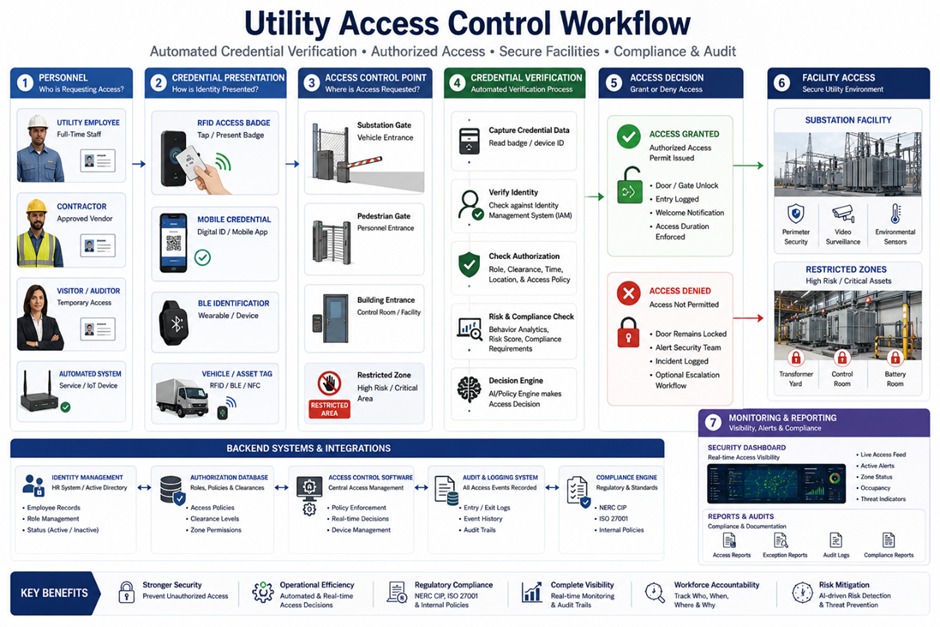
Utility Access Control Workflow Diagram for RFID Credential Verification, Digital Identity Management, and Compliance
This workflow diagram shows how utility employees, contractors, and authorized personnel are authenticated through RFID credentials, digital identity systems, and access control software before entering secured facilities. It highlights automated credential verification, authorization databases, restricted zone enforcement, real-time security monitoring, and audit reporting to support regulatory compliance and secure utility operations.
Grid Asset Tracking Software
Utility organizations manage extensive asset inventories across large geographic territories. Asset tracking software provides centralized visibility into critical infrastructure.
Asset Tag Management Software
Asset Tag Management Software maintains identification records for utility assets. Supported asset categories include:
The software maintains asset identifiers, ownership records, deployment history, and operational documentation.
Equipment Location Software
Equipment Location Software helps utilities determine where assets are located across operational environments. Capabilities include:
Utilities gain improved visibility into asset utilization and equipment availability.
Asset Lifecycle Management
Lifecycle management software supports:
Comprehensive asset histories improve operational planning and audit readiness.
Grid Inventory Management Software
Inventory accuracy plays a significant role in utility reliability and outage response effectiveness.
Spare Parts Tracking Software
Spare Parts Tracking Software helps utilities maintain visibility into inventory availability. Capabilities include:
Operational teams can quickly identify required parts during maintenance and emergency response activities.
Stock Reconciliation Software
Inventory discrepancies can impact maintenance schedules and restoration activities. Stock reconciliation software supports:
Accurate inventory records reduce operational risk and improve planning.
Inventory Forecasting Support
AI-powered forecasting capabilities assist organizations by analyzing:
Forecasting helps utilities maintain operational readiness while controlling inventory costs.
Grid Traceability & Compliance Software
Regulatory requirements and asset accountability programs require comprehensive traceability capabilities.
Component Traceability Software
Component Traceability Software maintains records throughout the operational lifecycle of utility assets. Capabilities include:
Utilities can quickly retrieve asset histories when required for audits, maintenance planning, or operational investigations.
Transformer Traceability Management
Transformer management functions support:
Comprehensive transformer records improve operational transparency.
Meter Compliance Documentation
Utilities often maintain large populations of metering equipment requiring compliance management. Software capabilities include:
Accurate records help organizations meet industry and regulatory obligations.
Operational Dashboards and Reporting
Utility operators require visibility into workforce activities, asset status, inventory availability, and access events. GridEnergy AI software provides dashboards supporting:
Interactive reporting helps operational teams make informed decisions using current information.
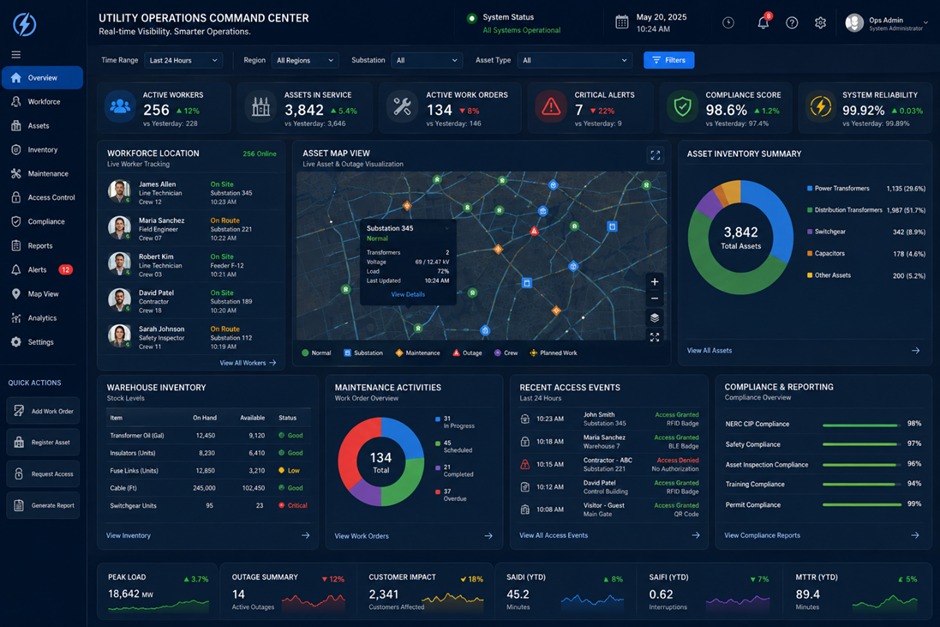
Utility Operations Dashboard for AI-Driven Workforce Tracking, Asset Management, Inventory Monitoring, and Compliance Reporting
This dashboard mockup demonstrates a centralized utility operations that combines real-time workforce visibility, transformer and asset tracking, warehouse inventory management, maintenance activities, and access control events. It provides operational performance metrics, compliance reporting, and AI-powered insights to help utility organizations improve asset utilization, workforce coordination, regulatory compliance, and decision-making.
Enterprise Software Integration Support
Utility software rarely operates independently. Organizations typically require interoperability with existing operational systems. GridEnergy AI software supports integration with:
Integration capabilities help utilities maintain operational continuity while expanding visibility across existing workflows.
Deployment Options
Cloud-Based Utility Software
Cloud deployment supports:
- Centralized administration
- Multi-site visibility
- Remote access
- Enterprise reporting
- Scalable operations
Server-Based Utility Software
Server deployments support:
- Internal infrastructure requirements
- Utility security policies
- Dedicated operational environments
- Controlled data management
Hybrid Deployment Models
Hybrid deployments combine cloud and server-based capabilities to meet operational and compliance requirements. This approach provides flexible data management, enhanced security, reliable system access, and integration with existing utility technologies while supporting evolving operational needs.
Applications Across Smart Grid Operations
GridEnergy AI software supports numerous utility environments, including:
Industry Expertise Behind the Software
GridEnergy AI benefits from extensive experience accumulated through thousands of IoT deployments across industrial environments. Supported by Aperture Venture Studio and GAO, the organization draws upon decades of implementation knowledge, technical research, and operational experience.
Utility organizations benefit from software developed with input from experienced engineers, Ph.D. professionals, industry specialists, research institutions, government organizations, and large enterprise operators. Strong quality assurance practices and expert support help ensure successful implementation and long-term operational value.
Next Steps
Modern utility operations require software capable of connecting workforce visibility, asset accountability, access management, inventory control, maintenance coordination, and compliance documentation into a unified operational environment.
GridEnergy AI software provides the foundation needed to improve operational visibility, strengthen security, optimize resource utilization, and support reliable smart grid operations across transmission, distribution, renewable energy, and utility infrastructure environments.
Contact GridEnergy AI
Discuss your operational requirements with our technical specialists and explore how AIoT solutions can improve grid asset visibility, workforce safety, access control, inventory management, and utility infrastructure performance.
Contact Us