
Utility AI and IoT Knowledge Center
Modern utility organizations face increasing demands for grid reliability, workforce safety, infrastructure accountability, regulatory compliance, and operational efficiency. Successful AI and IoT initiatives require more than technology deployment. Utility operators, engineers, asset managers, operations leaders, security teams, and project managers need access to practical technical information that supports planning, implementation, and operational decision-making.
The GridEnergy AI Resource Center provides educational materials, technical references, implementation guidance, operational best practices, and utility-specific knowledge focused on workforce visibility, asset tracking, access control, inventory management, maintenance coordination, and component traceability.
The objective is to help utility professionals better understand how AI and IoT technologies can be applied within transmission networks, distribution systems, substations, renewable energy facilities, utility warehouses, fleet operations, and infrastructure modernization projects.
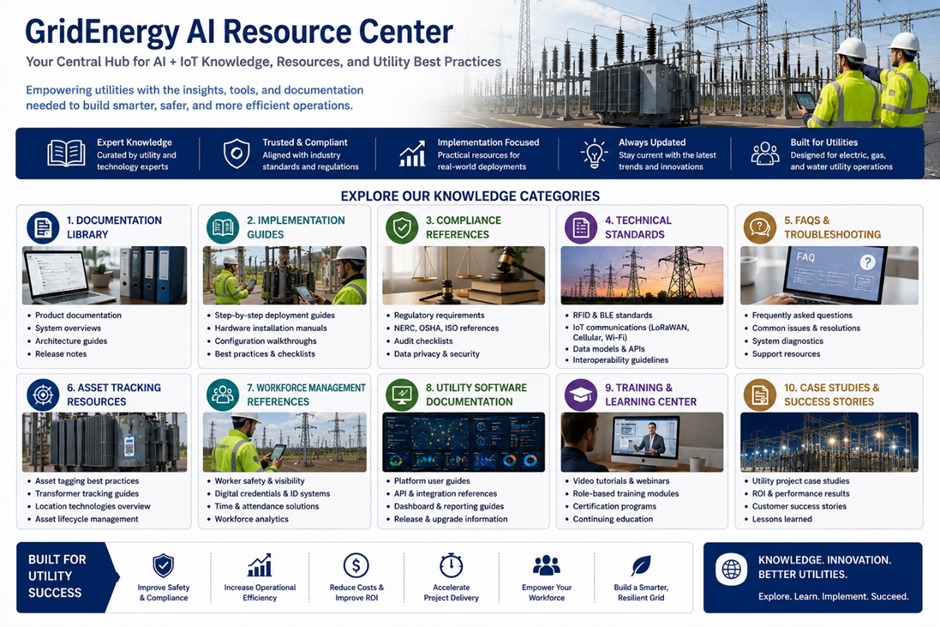
GridEnergy AI Resource Center Infographic for Utility Documentation, Compliance, Training, and AIoT Implementation Resources
This infographic presents the key resource categories available within the GridEnergy AI Resource Center, including technical documentation, implementation guides, compliance references, standards, FAQs, asset tracking resources, workforce management materials, software documentation, and training content. It demonstrates how centralized knowledge resources support utility professionals in deploying AI and IoT solutions, improving operational efficiency, regulatory compliance, and workforce readiness.
Documentation
Technical documentation provides utility organizations with detailed information needed to evaluate, deploy, operate, and maintain AI and IoT solutions.
Solution Documentation
Available documentation topics include:
These documents help technical teams understand operational workflows, deployment considerations, and integration requirements for successful implementation across utility environments.
Technology Documentation
Technical references are available for:
Documentation explains technology capabilities, deployment scenarios, operational requirements, and best practices for effective implementation, system integration, and long-term operational success.
Integration Documentation
Utility organizations often require interoperability between AI and IoT systems and existing operational software. Integration resources include:
These materials assist implementation teams during planning and deployment phases.
Frequently Asked Questions
The FAQ section addresses common questions raised by utility operators, engineers, asset managers, and project teams.
Workforce Visibility FAQs
Common workforce management topics include:
Asset Tracking FAQs
Frequently discussed asset tracking topics include:
Access Control FAQs
Security and access management questions often focus on:
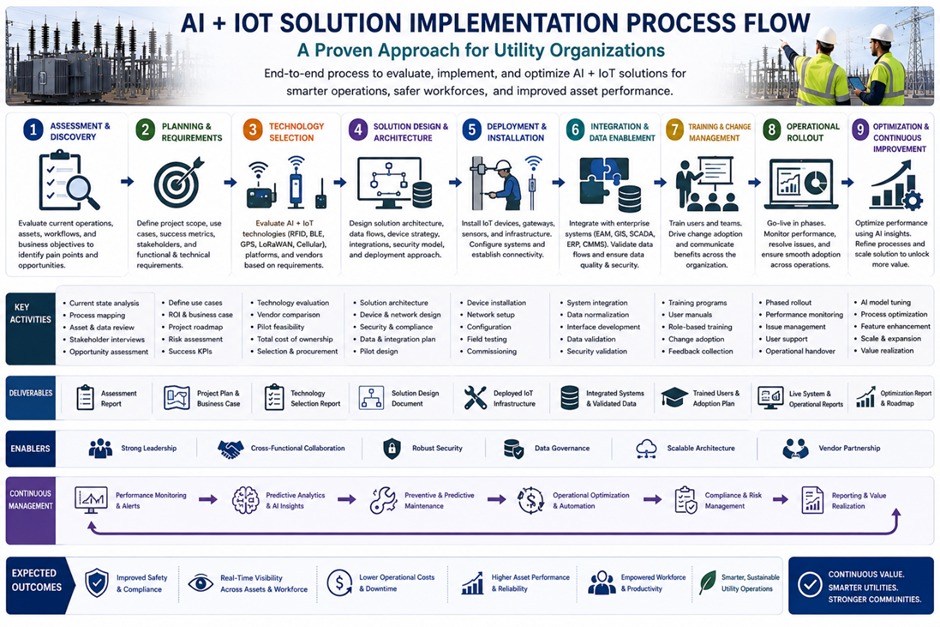
Utility AI and IoT Implementation Process Flow Diagram for Assessment, Deployment, Integration, and Operational Optimization
This process flow diagram shows the typical lifecycle of implementing AI and IoT solutions in utility environments, from initial assessment and planning through technology selection, deployment, system integration, workforce training, operational rollout, optimization, and ongoing management. It highlights a structured approach that enables successful digital transformation, improved operational efficiency, regulatory compliance, and long-term asset performance.
Grid Asset Tracking Glossary
Understanding industry terminology helps utility organizations successfully evaluate and implement AI and IoT initiatives.
Asset Tracking Terms
Workforce Management Terms
Security and Access Terms
Traceability Terms
Compliance & Standards Guide
Utility organizations operate within highly regulated environments where accurate documentation and operational accountability are essential.
Utility Compliance Objectives
AI and IoT solutions can support:
Operational Documentation Requirements
Organizations often maintain records associated with:
AI and IoT solutions help improve the accuracy and availability of these records.
Audit Readiness
Effective audit preparation typically requires:
Maintaining organized operational records helps utilities improve governance and reporting efficiency while strengthening compliance, accountability, transparency, coordination, decision-making, operational planning, data accuracy, and long-term infrastructure management capabilities.
Implementation Best Practices
Utility organizations frequently follow structured approaches when deploying AI and IoT solutions. Recommended activities include:
Structured implementation approaches help reduce deployment risks and improve long-term success.
Industry Insights and Technical Guidance
The Resource Center also includes educational content covering:
Why Utility Organizations Use the Resource Center
Utility operators, engineers, project teams, and technology leaders use these resources to:
Access to practical technical guidance helps organizations make informed operational and investment decisions.
Continue Exploring GridEnergy AI Solutions
The GridEnergy AI Resource Center serves as a central knowledge destination for utility professionals seeking practical information about workforce visibility, asset tracking, access control, inventory optimization, maintenance coordination, and component traceability.
Whether planning a new deployment, evaluating technology options, improving operational processes, or expanding existing programs, these resources provide the technical guidance needed to support successful AI and IoT initiatives across modern smart grid operations.
Contact GridEnergy AI
Discuss your operational requirements with our technical specialists and explore how AIoT solutions can improve grid asset visibility, workforce safety, access control, inventory management, and utility infrastructure performance.
Contact Us